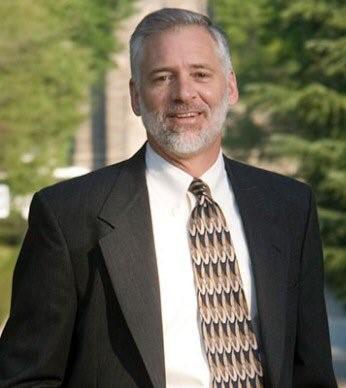
In her Baptist News Global opinion column "Can a Baptist Be a Catholic?" published today, Molly T. Marshall, President and Professor of Theology and Spiritual Formation at Central Baptist Theological Seminary in Shawnee, Kansas, references my new book Baptist Identity and the Ecumenical Future: Story, Tradition, and the Recovery of Community (Baylor University Press). Here's an excerpt from the beginning of the column:
A cadre of Baptist scholars has been writing about emerging catholicity, the holy desire for unity among all ecclesial communions. Taking tradition more seriously as a source for theological construction, these Baptists urge usage of the ancient creeds of the apostolic heritage of the whole church to supplement their reading of Scripture. A leading theologian in the movement, Steven Harmon, contends, “Baptists have their own distinctive ecclesial gifts to offer the church catholic, without which even the churches currently in communion with the bishop of Rome are something less than fully catholic themselves.”
As a staunch Baptist I, too, long for catholicity. In many respects the future of Christianity depends upon a greater ecumenicity .... (read the full column at Baptist News Global)
Interested in reading Baptist Identity and the Ecumenical Future? Order the book from Baylor University Press or via Amazon.
Doing theology in, with, and for the church--in the midst of its divisions, and toward its visible unity in one eucharistic fellowship.
Showing posts with label Baptists. Show all posts
Tuesday, September 13, 2016
Friday, October 23, 2015
Curtis Freeman to speak at Gardner-Webb University Oct. 26
Dr. Curtis Freeman, Research Professor of Theology and Baptist Studies and Director of the Baptist House of Studies at Duke University Divinity School, will present a lecture titled "Undomesticated Dissent" on Monday, October 26, at 7:00 P.M. as part of the Joyce Compton Brown Lecture Series sponsored by the Life of the Scholar program at Gardner-Webb University. The lecture will be held in Faith Hall in Tucker Student Center on the Gardner-Webb University campus in Boiling Springs, North Carolina. A reception with light refreshments will follow.
Dr. Freeman is the author of Contesting Catholicity: Theology for Other Baptists (Baylor University Press, 2014) and editor of A Company of Women Preachers: Baptist Prophetesses in Seventeenth-Century England (Baylor University Press, 2011), Baptist Roots: A Reader in the Theology of a Christian People (Judson Press, 1999), and Ties That Bind: Life Together in the Baptist Vision (Smyth & Helwys, 1994). (Copies of Contesting Catholicity will be available for purchase and signing after the lecture.) Dr. Freeman is currently co-chair of the commission to the international ecumenical dialogue between the Baptist World Alliance and the World Methodist Council and has also served on the commissions to the international ecumenical dialogues the Baptist World Alliance has held with the Anglican Communion and the Catholic Church.
The point of departure for Dr. Freeman's lecture "Undomesticated Dissent" is Bunhill Fields cemetery in London, where there are stone memorials to John Bunyan, Daniel Defoe and William Blake. The lecture focuses on three narratives of dissent: Bunyan’s Pilgrim’s Progress, Defoe’s Robinson Crusoe, and Blake’s Jerusalem. According to Freeman, "By telling the story of dissent in this way, it will become clear that the voices of dissent are always subject to the forces of domestication, by becoming 'hand-tamed' to the powers that be. At times the radical spirit slumbers away in uncomfortable dreams while the nations rage or becomes gentled to the touch and taste of polite culture, only to rise again unexpectedly in all its undomesticated fervor. Perhaps by remembering these stories of those memorialized in stone, the slumbering saints may be awakened and the voices of undomesticated dissent may arise yet again."
Dr. Freeman will also serve as guest preacher for the Gardner-Webb University School of Divinity chapel service earlier that day (Monday, October 26) at 1:00 P.M. in Dover Chapel on the Gardner-Webb University campus. His message, titled "Beastly Powers," will be based on Revelation 13:1-18. The public is invited to attend both the School of Divinity chapel service and the Joyce Compton Brown lecture (free of charge, no reservations required).
Auxiliary aids will be made available to persons with disabilities upon request 48 hours prior to the event. Please call 704.406.4264 or email servicerequests@gardner-webb.edu with your request.
Tuesday, October 13, 2015
Judson University Founders' Day address
This Friday (October 16, 2015) I will deliver the Founders' Day Convocation Address at Judson University in Elgin, Illinois. I'll speak on the theme "Judson, Baptists, the Whole Church, and God's Mission." Information about the day's events is posted on the Judson web site in the linked articles below:
Judson University to Celebrate History and Heritage During Founders’ Day 2015
Founders' Day 2015 Featuring Dr. Steven R. Harmon
Judson University to Celebrate History and Heritage During Founders’ Day 2015
Founders' Day 2015 Featuring Dr. Steven R. Harmon
Friday, September 25, 2015
Pope invokes MLK, a Baptist, as a Christian life to emulate (Baptist News Global)
Today Baptist News Global published the article "Pope invokes MLK, a Baptist, as a Christian life to emulate," which includes quotes with some of my reflections on Pope Francis' address to Congress yesterday (follow hyperlinked title to read the story at Baptist News Global)::
Pope invokes MLK, a Baptist, as a Christian life to emulate
Related post:
Baptists excited and hopeful about papal visit (Baptist News Global)
Monday, September 21, 2015
Baptists excited and hopeful about papal visit (Baptist News Global)
Last week I granted a telephone interview to Jeff Brumley of the Baptist News Global staff regarding Baptist perspectives on this week's papal visit to the United States. Some quotations from that interview appear in this story released today (follow hyperlinked title to read the story at Baptist News Global):
Baptists excited and hopeful about papal visit
Thursday, February 19, 2015
Journal of Baptist Studies engages Towards Baptist Catholicity and Contesting Catholicity
The current issue of the Journal of Baptist Studies (sponsored by California Baptist University) includes a pair of articles engaging proposals regarding the relation of Baptist identity to the larger Christian tradition in my book Towards Baptist Catholicity: Essays on Tradition and the Baptist Vision and Curtis Freeman's more recent book Contesting Catholicity: Theology for Other Baptists: “Baptists and the Catholicity of the Church: Toward an Evangelical Baptist Catholicity” by Matthew Y. Emerson and R. Lucas Stamps, and “Baptists and the Apostolicity of the Church” by James Patterson. Stamps also reviews Freeman's book in the issue. This engagement by Southern Baptist theologians is informed by a "post-conservative" theological trajectory exemplified by Kevin J. Vanhoozer, contrasted with the postliberal trajectory exemplified by George Lindbeck and within which they place Harmon and Freeman (a fair assessment). Last year Emerson and I had a constructive interchange regarding our perspectives on our respective blogs.
The full issue is available online; the Table of Contents appears below:
Volume 7 (2015)
Editorial, p. 1
Contributors, p. 3
Articles
“Baptists and the Unity of the Church,” by Christopher W. Morgan, p. 4
“Baptists and the Holiness of the Church: Soundings in Baptist Thought,” by Ray Van Neste, p. 24
“Baptists and the Catholicity of the Church: Toward an Evangelical Baptist Catholicity,” by Matthew Y. Emerson and R. Lucas Stamps, p. 42
“Baptists and the Apostolicity of the Church,” by James Patterson, p. 67
Book Reviews
Currid, John D. Against the Gods: The Polemical Theology of the Old Testament, reviewed by Kenneth J. Turner, p. 83
Freeman, Curtis W. Contesting Catholicity: Theology for Other Baptists, reviewed by R. Lucas Stamps, p. 86
George, Timothy. Theology of the Reformers, rev. ed., reviewed by John Gill, p. 91
Hays, Christopher M. and Christopher B. Ansberry, eds. Evangelical Faith and the Challenge of Historical Criticism, reviewed by Matthew Y. Emerson, p. 95
Holmes, Stephen R. The Quest for the Trinity: The Doctrine of God in Scripture, History and Modernity, reviewed by Michael A. G. Haykin, p. 99
Sanders, Fred. Wesley on the Christian Life: The Heart Renewed in Love, reviewed by Christopher Bosson, p. 101
Wednesday, January 28, 2015
Review of Stephen Holmes, Baptist Theology (T&T Clark Doing Theology series)
Courtesy of the Brill Self-Archiving Rights policy, I'm pleased to be able to to share the full text of my review of Stephen R. Holmes, Baptist Theology (Doing Theology series; London and New York: T&T Clark, 2012), which appears in Ecclesiology 11, no. 1 (2015): 123-26 (click on hyperlink).
Monday, October 27, 2014
New publication--"Free Church Theology, the Pilgrim Church, and the Ecumenical Future"
The new issue of the Journal of Ecumenical Studies (vol. 49, no. 3, Summer 2014) includes my journal article "Free Church Theology, the Pilgrim Church, and the Ecumenical Future" (pp. 420-42). The précis published at the beginning of the article follows below:
Within the framework of receptive ecumenism, this essay addresses the question: is there anything distinctive about theology in the Free Church tradition that constitutes some portion of the ecclesial gifts that the rest of the church might contemplate receiving from the Free Churches? The author’s own Baptist tradition serves as a particular example that represents the larger Free Church tradition in this connection. A survey of the international bilateral dialogues with Baptist World Alliance participation reveals a Free Church theology that is both radically biblical and radically catholic and yet relentlessly pilgrim in its resistance to overly realized eschatologies of the church and its doctrinal formulations. After establishing connections between Free Church and ecumenically shared expressions of a pilgrim church theology, the essay concludes by proposing seven ecclesiological theses rooted in the narrative Christology of Baptist theologian James Wm. McClendon, Jr., regarding what it might mean ecumenically for the church to embody the story of Jesus as a pilgrim people.
Thursday, September 18, 2014
Mount Aloysius College Fall Ecumenical Lectures
![]() |
| Mount Aloysius College |
For more information, see the MAC press release "Mount Aloysius Fall Ecumenical Lectures to Feature Baptist, Catholic Commonality"; to inquire about registration for the luncheon lecture, contact the office of Mount Aloysius College’s Vice President for Mission Integration, Sr. Helen Marie Burns, RSM (814-886-6510 or hburns@mtaloy.edu).
Wednesday, September 17, 2014
Baptist theology and Baylor University Press
I received the Fall 2014-Spring 2015 Baylor University Press catalog in the mail at the office yesterday. Its new releases include two substantial constructive projects by Baptist theologians: Contesting Catholicity: Theology for Other Baptists by Curtis W. Freeman and Baptists and the Communion of Saints: A Theology of Covenanted Disciples by Paul S. Fiddes, Brian Haynes, and Richard Kidd. In addition, BUP is releasing The Collected Works of James Wm. McClendon, Jr., vols. 1 and 2, ed. Ryan Andrew Newson and Andrew C. Wright.
These follow on the heels of BUP's 2012 republication of McClendon's Systematic Theology (vols. 1, 2, and 3). With these publications, Baylor University Press is making significant contributions to the furthering of Baptist constructive theology.
Friday, November 1, 2013
Baptists and the veneration of the saints
Today is All Saints' Day, and today the Baptist World Alliance circulated a link to an October 31 blog post by BWA General Secretary Neville Callam commending the Baptist retrieval of the practice of the veneration of the saints, invoking Baptist theologian James Wm. McClendon Jr.'s theological rationale for such a renewed and renewing practice offered in his book Biography as Theology (cf. a previous Ecclesial Theology post making this connection and argument, referencing a recommendation made in a chapter in my own book Towards Baptist Catholicity). Below is an excerpt from Callam's post:
Shouldn’t Baptist churches retrieve the practice of venerating the saints, that is, engaging in corporate worship acts designed not to worship the saints, but to remember, honor, learn from, and celebrate saints from our Baptist family and from other Christian communions? Until we regularly include commemoration of the saints in our worship celebrations, we will continue to neglect the opportunity to give proper value to those from our past who have borne courageous witness to faithful discipleship. Commemorative acts done in our Sunday morning services would provide a suitable accompaniment for the tradition some have already developed as part of their Vacation Bible School program, in which stories are told of great spiritual leaders worthy of emulation.... (Read the full post on the BWA General Secretary's Blog)
Friday, October 4, 2013
Baptists and Classical Christian Worship--podcast interview
Previous posts on Ecclesial Theology have called attention to the new book Gathering Together: Baptists at Work in Worship edited by Rodney Wallace Kennedy and Derek C. Hatch and an Associated Baptist Press story exploring issues raised by the book. Yesterday (October 3, 2013) the talk radio program Issues, Etc. (with Lutheran Church--Missouri Synod associations) posted an hour-long podcast interview with book editors Kennedy and Hatch. It's fascinating and informative listening that provides insight beyond the book into what it means to implement worship grounded in liturgical catholicity in flesh-and-blood Baptist communities.
Listen to the interview "Baptists and Classical Christian Worship" either in online streaming format or as an mp3 download. (Disclaimer: my recommendation of this interview in no way constitutes an endorsement of any of the commentaries or advertisements in the interludes between segments of the interview.)
For what it's worth, a couple of delightful features of the interview with differing levels of significance: my gratifying discovery that Dr. Hatch is opening many of his classes at Howard Payne University--my undergraduate alma mater and the place where my academic theological pilgrimage that led to my present work began--with acts of worship from the Daily Office and structuring his Christian Doctrines course around the framework of the Apostles' Creed (and that First Baptist Church in Brownwood, Texas where he is a member has engaged in a congregational study of the Apostles' Creed and has recited it in worship), and the use of a little Coldplay as bumper music in the interview.
Related posts;
Gathering Together: Baptists at Work in Worship
Associated Baptist Press on Baptist reception of the liturgical riches of the whole church
Friday, April 5, 2013
Baptist World Alliance General Secretary on Baptists and patristic biblical interpretation
The April 2013 issue of the Baptist World Alliance electronic publication BWA Connect includes a column by Baptist World Alliance General Secretary Neville Callam in which he reflects on the Baptist tendency to ignore the tradition of biblical interpretation when interpreting the Bible, notes a Baptist project dedicated to the recovery of the tradition of Baptist biblical interpretation, and commends the extension of this tradition beyond Baptist beginnings to include patristic biblical interpretation. Callam points to a new resource published by the Faith and Order Commission of the World Council of Churches that provides access to the riches of patristic interpretation of the four Gospels as an example of how the earliest interpretations of Scripture after the New Testament serve as important resources for communities that seek to interpret and perform Scripture today. Since I devoted a chapter of my book Towards Baptist Catholicity: Essays on Tradition and the Baptist Vision to how Baptists might make use of patristic biblical interpretation in their contemporary readings of Scripture, I was gratified to see the BWA General Secretary commend this practice. Callam's BWA Connect column appears below.
Finding More Light and Truth
By Neville Callam
| Neville Callam |
Some Baptists have claimed to be "a people of the book." Often, this self-designation is meant to highlight the value we place on the Bible. In We Baptists, published by the BWA in 1999, the priority Baptists assign to the Bible is reflected in a number of ways. Take the following affirmation, for example:
Baptists believe that the Bible is both the true record of God's revelation to our world and the supreme written guide for our faith and practice today. Because it leads us to Jesus Christ the living Word, we speak of it as "the Word of God," and believe it was inspired by God's Spirit. [Baptists regard the Bible as] totally sufficient; that is, all teaching must be in harmony with the Scriptures, and all teaching must be tested by the Scriptures only.
What spurred me to consider again the disputable tag "a people of the book" was a fresh look at one of the many books published in 2009 when Baptists were marking their quadricentennial, the 400th anniversary of Baptist witness. In the introduction to The Acts of the Apostles: Four Centuries of Baptist Interpretation (Waco, Texas: Baylor University Press, 2009), the editors make a bold claim that should be taken seriously. This is what they say:
Baptists for the most part have shown little interest in recovering Baptist interpretation of Scripture. There are several reasons for this. For one, Baptists have historically spent more time debating the authority of Scripture than engaged in dialogue about what the Bible says, much less what our forebears said it says. For another, Baptists belong to a larger movement of Christians committed to restoring the New Testament church, an endeavor that leaves little room for sustained interest in the intervening and subsequent history of biblical interpretation.
If we believe the accusation is valid -- and it seems that way to me -- we may acknowledge that our churches need to pay more attention to the massive literary output of those who are committed to recovering interpretations of the biblical text, not least those who gave committed service as interpreters of the Bible over the past four centuries of Baptist history -- which is what the Baylor text attempts to do with respect to the Acts of the Apostles. Reading the book, we may be surprised at the wide diversity of hermeneutical approaches used by Baptists and the different conclusions they have drawn from reading a particular section of the Bible.
If we wish to extend this quest beyond Baptist boundaries and go back to the first few centuries of the church's life, much exists to aid this quest. See, for example, a brief and very accessible book, Reading the Gospels with the Early Church: A Guide (Geneva: WCC Publications, 2013), prepared by Tamara Grdzelidze and her colleagues in the Faith and Order movement of the World Council of Churches. In six short sections, passages from the New Testament are accompanied by brief comments offered respectively by John Chrysostom, Augustine of Hippo, Cyril of Jerusalem, Ambrose of Milan, Ephrem the Syrian, Origen, Pseudo-Macarius and Hippolytus. In each section, the biblical text and commentary are followed by a brief note about the commentators, recommendations for group work and a prayer.
This new guidebook reflects how, during the first 450 years of the church's life, significant biblical interpreters shared the conviction that the biblical text is "a revelation of the truth through the Holy Spirit in the Church." This does not mean, however, that the literary output of these interpreters did not manifest diversity and creativity resulting partly from the interpretive methods employed. While taking the Bible seriously, the interpreters were free to discover horizons of meaning and to develop perspectives on the text of Scripture that provided a rich tapestry that is as diverse as it is enriching.
Perhaps the ancient interpreters of the New Testament model for us how to agree on the essential biblical message while setting forth distinct, though not inconsistent, understandings of particular texts of Scripture. We should be able to do this without having to bear the pejorative labels some contemporary believers love to use to discredit others.
We should reasonably expect that Christians reading the Bible in the context of their communities of faith will continue to search for, and find, "more light and truth" from God's Word!
2013 Baptist World Alliance
Subscribe to:
Posts (Atom)